
Many believe that a fitness journey means switching to a Western-style diet. In reality, a healthy Indian diet plan is one of the most sustainable ways to lose weight and combat lifestyle diseases. You don’t need to replace your favorites with foreign alternatives. You can achieve long-term results using the ingredients already in your pantry by focusing on mindfulness and the right combinations of dal, roti, and sabzi.
Indian Cuisine Acts As a Weight Loss Powerhouse
India’s incredible culinary diversity is actually a secret weapon for sustainable health. The traditional Indian plate is naturally designed for balance and the real secret to losing weight lies in returning to the authentic roots of how they were meant to be eaten.
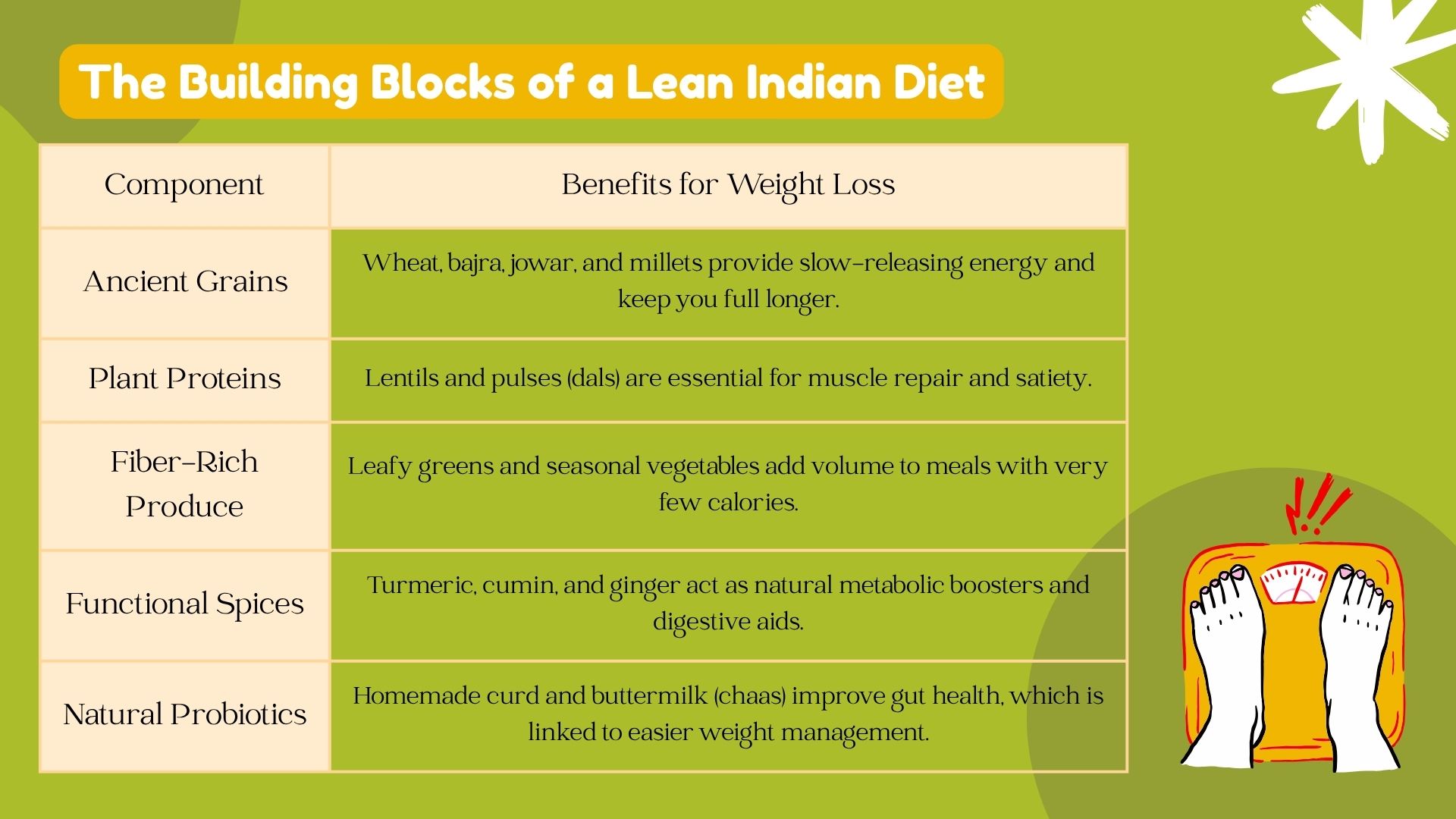
The truth is, Indian food doesn’t inherently cause weight gain. The challenge usually lies in three specific areas
- Overdoing the rice or rotis relative to the vegetables.
- Using excessive fats or deep-frying instead of sautéing or steaming.
- Eating hidden sugars in the form of modern processed snacks and syrupy desserts.
When you prioritize quality ingredients and mindful cooking styles, weight loss stops feeling like a chore and starts feeling like a lifestyle you actually enjoy.
Aim for a plate that is 50% vegetables, 25% protein (dal/sprouts/lean meat), and 25% complex carbs.
Indian Diet Strategy for Weight Loss
- Prioritize the Home Kitchen
The secret ingredient in most restaurant meals is excess oil and hidden sugars. When you cook at home, you can dictate the quality of fats, like using minimal ghee or cold-pressed oils, and the amount of sodium. Replace processed diet namkeens with whole, single-ingredient foods.
- Power Up with Protein
Protein is your best friend for metabolism and muscle preservation. Ensure every meal has a clean source like lentils (dal), chickpeas (chana), sprouts, paneer, tofu, lean chicken, fish, or eggs. Protein reduces hunger hormones, keeping those 4 PM snack cravings at bay.
- Optimize Hydration
Water is the simplest metabolic booster available. Make sure to have 2.5-3 liters daily. Proper hydration flushes out excess sodium, significantly reducing water retention and bloating. Drink a glass of water 20 minutes before a meal to naturally curb your appetite.
- Discipline Your Clock
When you eat is often as important as what you eat. Try to finish dinner early to give your body time to digest before sleep. Ensure a minimum of 120 minutes between your last bite and hitting the pillow to prevent acid reflux and improve sleep quality.
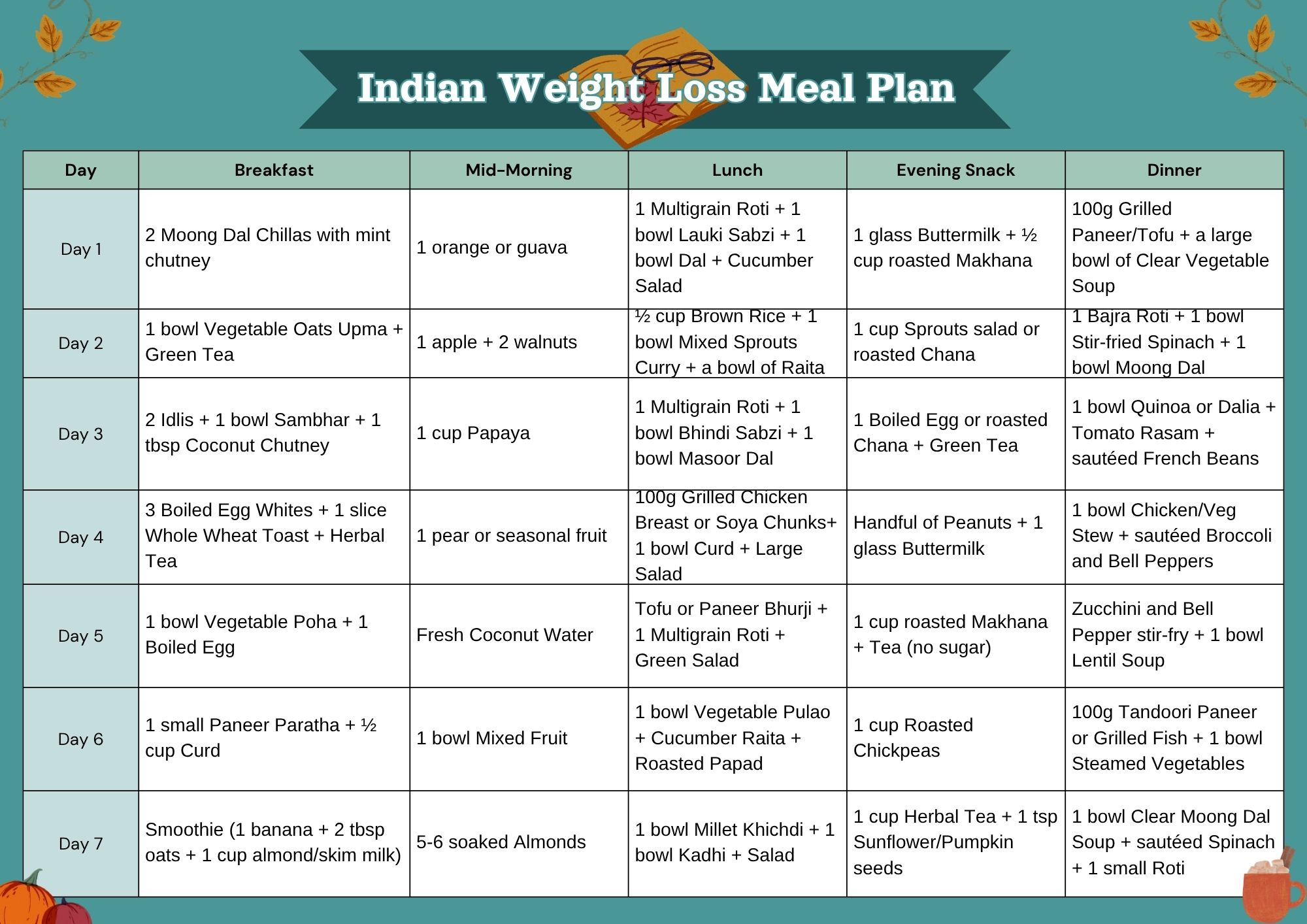
Best Non-Veg Picks
Indian non-veg can be heavy, but these swaps keep the flavor while cutting the calories.
- Tandoori Chicken- Stick to skinless portions; the clay oven method is perfect for high protein with zero frying.
- Fish (Rohu/Surmai)- Steamed or grilled preparations preserve Omega-3s better than deep-frying.
- Egg Whites- Boiled or grilled are the cleanest fuel for your muscles.
- Home-Style Stews- Light chicken or egg curries made with a tomato-onion base, skip the heavy cream and butter.
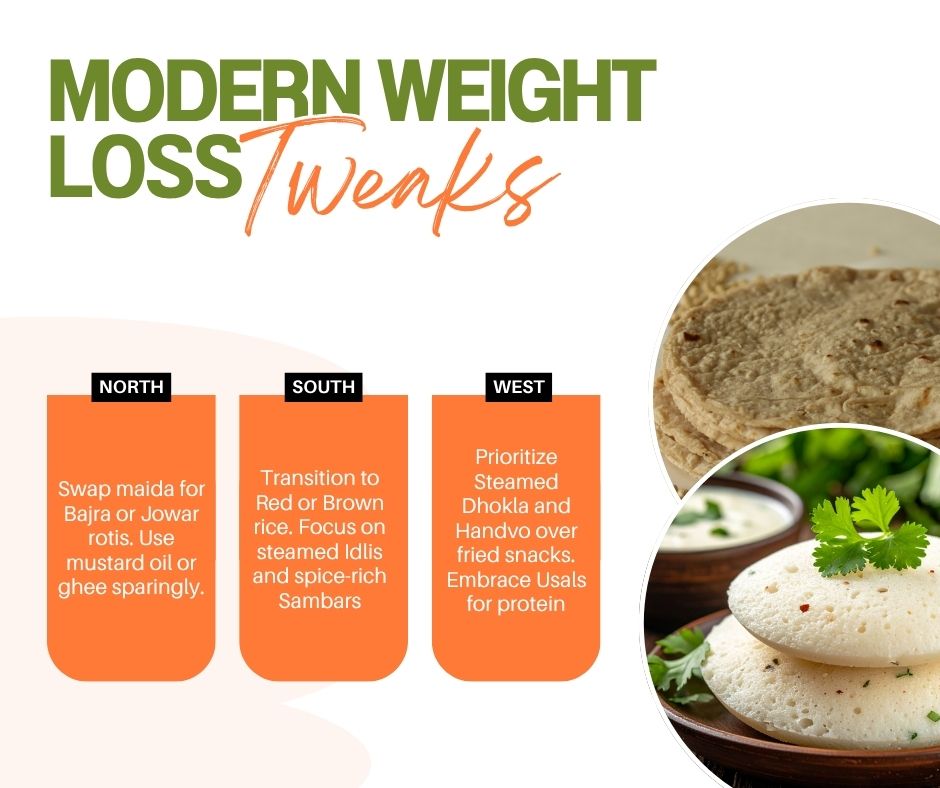
The Smart Snack List
Cravings happen and when they do, reach for these high-fiber, low-calorie options instead of the biscuit tin- roasted chana or dry-roasted makhana (foxnuts), boiled corn with a squeeze of lemon and black salt, buttermilk (chaas), coconut water, or jeera/ajwain water to boost digestion.
Avoid sodas/packaged juices and samosas, kachoris, and bhujia.
Lifestyle Habits That will Help
- Mindful Mechanics- Chew slowly. When you eat distraction-free, your brain actually registers fullness before you overeat.
- The 30-Minute Rule- Whether it’s brisk walking or Yoga, move your body daily to keep your metabolism humming.
- Sunday Strategy- Spend an hour prepping veggies or boiling sprouts. If the healthy food is ready, you won’t reach for the delivery app.