
When it comes to eating healthy, most people fail because of confusion-What should I eat? How much should I eat? Should I cut carbs completely? Is rice bad? Can I still eat roti?
The truth is, you don’t need extreme diets. All you need is structure.
The Balanced Plate Method is one of the simplest, most sustainable ways to structure meals for weight loss, disease reversal, better energy, and long-term health- especially within an Indian food pattern.
What Is the Balanced Plate Method?
The Balanced Plate Method is a visual way of dividing your plate to ensure the right proportion of fiber, protein, healthy carbohydrates, and good fats. Instead of calorie counting or eliminating food groups, you simply structure your plate correctly.
Think of your plate as divided into sections.
50% of your plate should be vegetables (Fiber + Micronutrients)- This should be the largest portion.
Vegetarian options would include lauki, tori, bhindi, gajar, beans, cabbage, palak, methi, sarson, tinda, karela, mixed sabzi and salad (cucumber, carrot, beetroot). You can also opt for non-vegetarian friendly add-ons like stir-fried vegetables with grilled chicken pieces, or egg bhurji loaded with vegetables.
The goal is High fiber = better digestion, stable blood sugar, longer satiety.
25% of your plate should be protein (Muscle + Metabolism Support)
Protein is important for fat loss, hormonal balance, reducing cravings, and preserving muscle mass. Vegetarian protein sources include dal (moong, masoor, arhar), rajma, chole, chana, paneer (controlled portion), tofu, curd (unsweetened), and sprouts. Non-vegetarian protein sources include eggs, chicken (grilled, curry with less oil), fish (preferably steamed or grilled), and mutton (occasionally, controlled portion).
If weight loss is the goal, ensure protein is adequate at every meal.
25% of your plate should have smart carbohydrates (Energy with Control)
Carbs are not the enemy but overeating refined carbs is. Choose 1-2 phulka (without ghee), small portion of rice (preferably hand-pounded or brown), millets (ragi, jowar, bajra), quinoa, and sweet potato. Avoid large heaps of white rice, refined flour (maida), fried parathas daily, and deep-fried snacks as staple carbs.
Include healthy Fats (Small but Important) in small quantities in the form of old-pressed mustard oil, groundnut oil (limited), a few nuts, seeds (flax, chia, pumpkin), and homemade ghee (in moderation). Fats help hormone health and satiety, but quantity matters.
How This Helps in Weight Loss
The Balanced Plate Method
- Controls portion size naturally
- Reduces insulin spikes
- Prevents overeating
- Keeps you full longer
- Reduces cravings
- Improves gut health
Most people gain weight because their plate is 70% carbs and only 10% protein. Correcting this ratio changes everything.
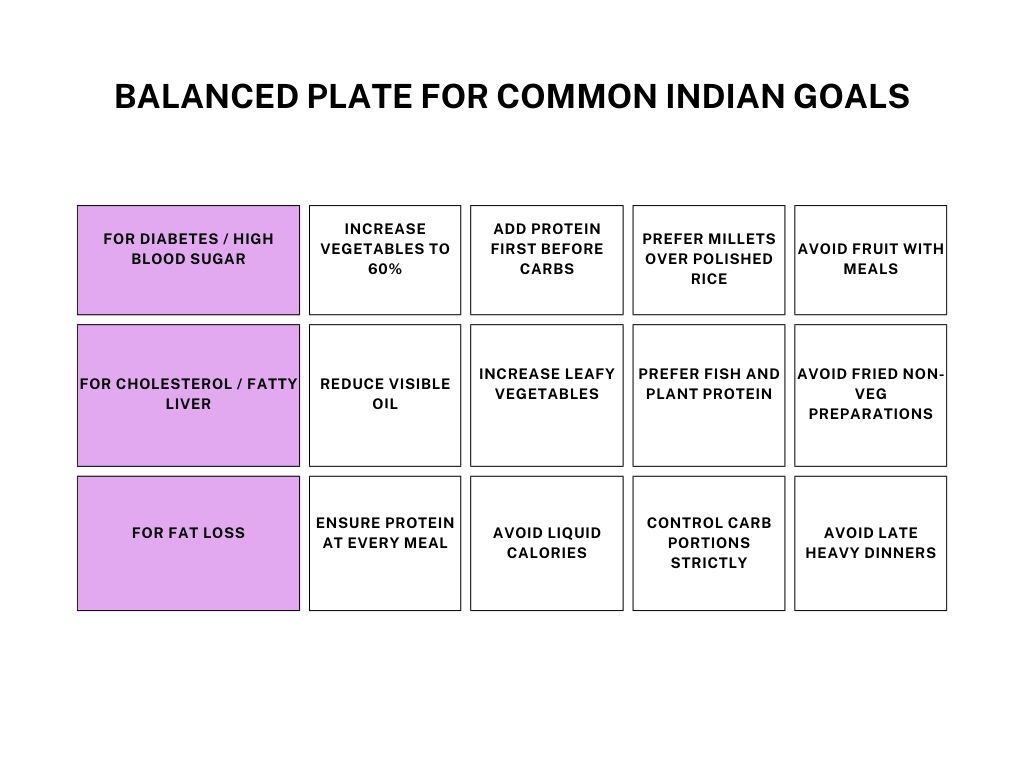
Balanced Plate for Common Indian Goals
Common Mistakes People Make
- Eating only carbs (roti + rice + potato)
- Skipping protein
- Drinking calories (tea with sugar, juices)
- Thinking veg automatically means healthy
- Overeating healthy food
Quantity and proportion matter more than food labels.
Reasons This Method Works Long-Term
Unlike crash diets you don’t eliminate Indian food, or avoid family meals or need special imported ingredients or feel deprived.
It works with home-cooked dal, simple sabzi, regular roti, basic eggs and chicken and its sustainability is what brings real results.
If you’re struggling with weight, diabetes, fatty liver, PCOS, or high cholesterol sometimes the solution lies in simply balancing your plate.
If you’d like a personalized Indian meal structure based on your health condition and goals, connect with Diet For Wellness.