While type 2 diabetes isn’t curable in the traditional sense, it is absolutely reversible for many people. You can often maintain healthy blood sugar levels without relying on medication by focusing on strategic dietary shifts and weight loss.
Think of reversal as long-term remission.
Because type 2 diabetes is a chronic condition, the underlying tendency for high blood sugar remains. Even if your levels are perfect today, symptoms can return if lifestyle habits shift. However, staying in remission means you can live for years, or even decades, free from the complications and daily medications typically associated with the disease.
Weight loss is the primary engine for reversal. Reducing body fat, specifically around the liver and pancreas, allows your body to manage insulin more effectively.
Ways to Manage and Reverse Type 2 Diabetes
Many researches suggest that Type 2 diabetes isn’t always a permanent sentence. You may be able to restore your body’s natural ability to regulate glucose by focusing on significant weight loss and metabolic changes.
The Power of Weight Loss & Low-Calorie Diets
Significant weight loss is the most effective driver of diabetes reversal. When you lose a substantial amount of weight, you reduce the fat stored in your liver and pancreas. This unclogging effect can jump-start the beta cells in your pancreas, which are responsible for producing insulin.
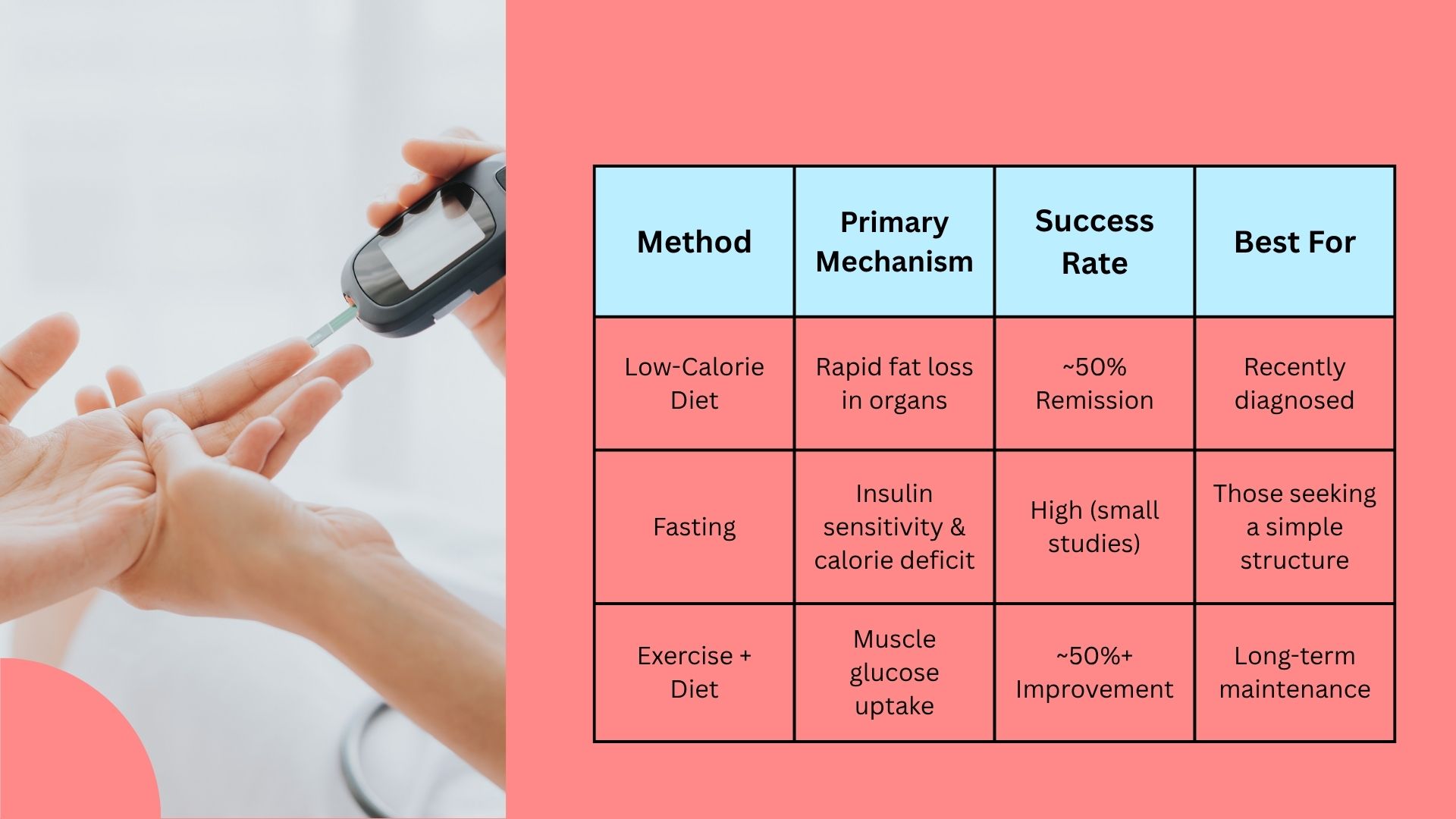
Studies have shown that a very low-calorie diet (around 625–850 calories/day) for 2-5 months can lead to remission. Nearly half of the participants in these studies kept their blood sugar in the normal range for over a year. Most people who successfully reversed their diabetes lost at least 30 pounds. Your chances of rescuing your insulin-producing cells are highest shortly after diagnosis.
Exercise
While exercise alone is rarely enough to trigger remission, it is a vital partner to dietary changes. Combining a modest calorie reduction (500-750 calories/day) with 10,000 steps daily and 2.5 hours of moderate weekly exercise has helped over half of study participants reach near-normal blood sugar without medication. Exercise makes your muscles more sensitive to insulin, helping your body process sugar more efficiently.
The Role of Fasting
Intermittent fasting is gaining traction as a good way to manage weight and blood glucose. Small studies have shown that 24-hour fasts (three times a week) can allow patients to discontinue insulin within weeks. Consuming only 500-600 calories two days a week has proven just as effective as daily calorie restriction for lowering blood sugar.
While promising, it is still unclear if the benefits of fasting last for decades. Consult your doctor to ensure you aren’t at risk for dangerous blood sugar dips (hypoglycemia) while fasting.